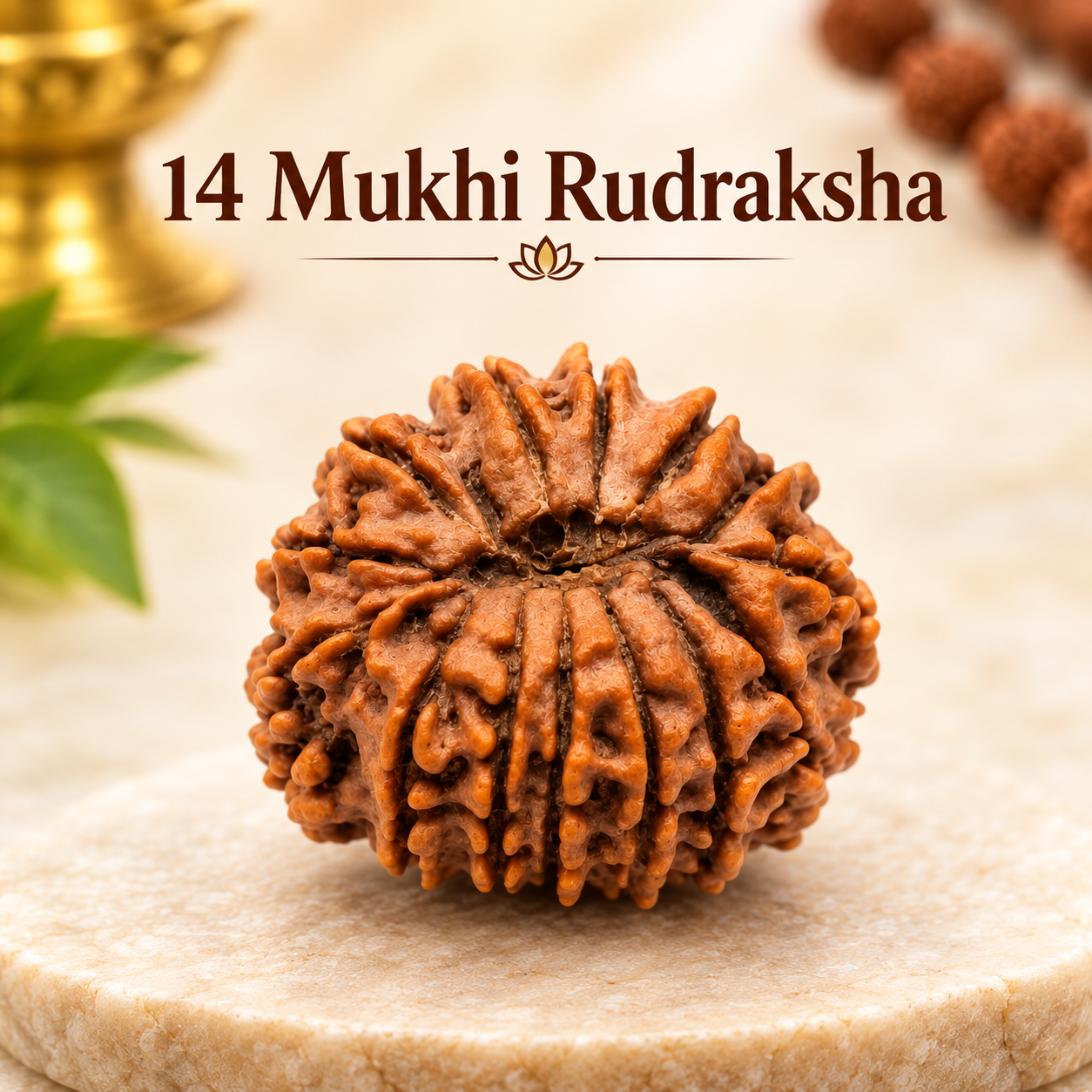
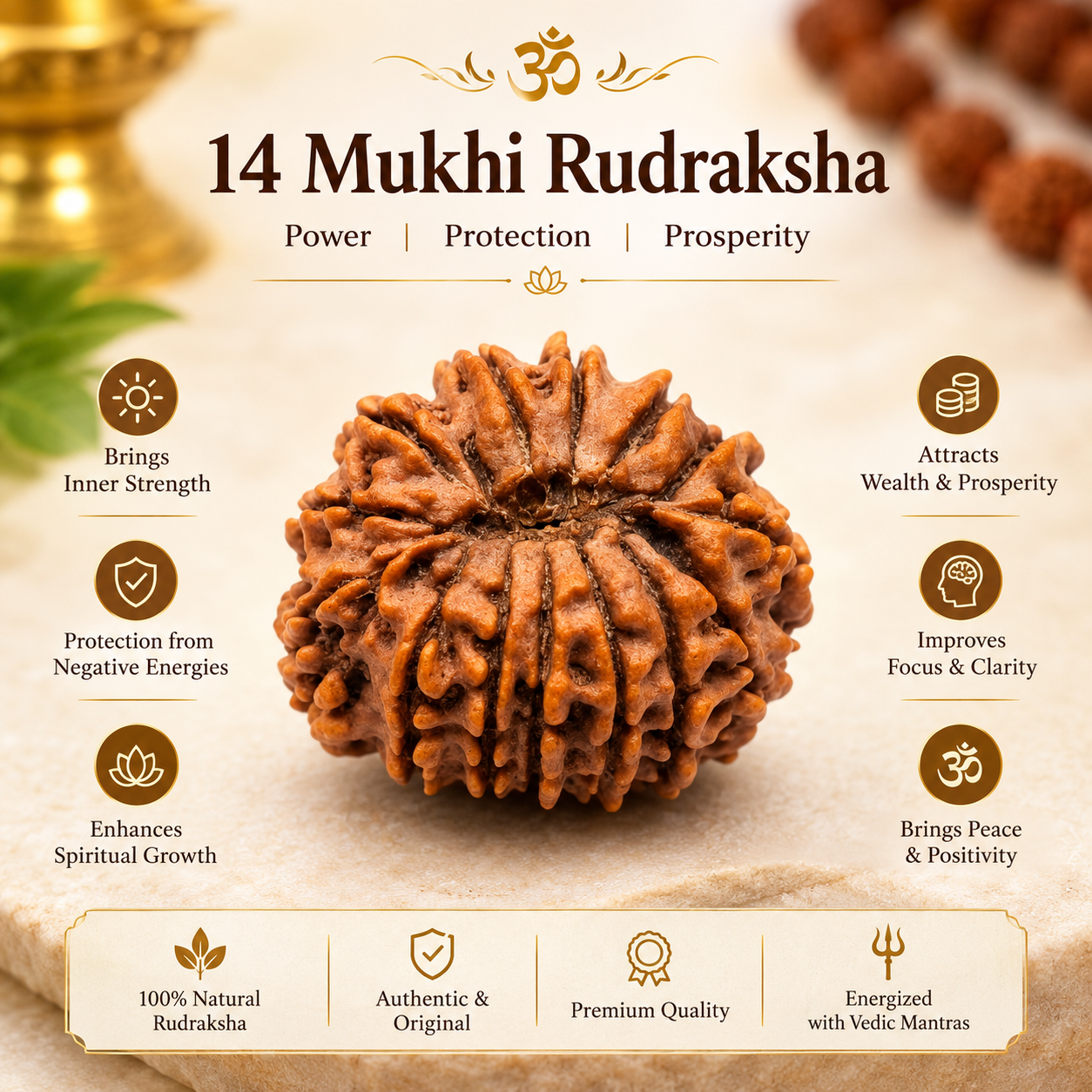
14 Mukhi Rudraksha – Traditional Significance
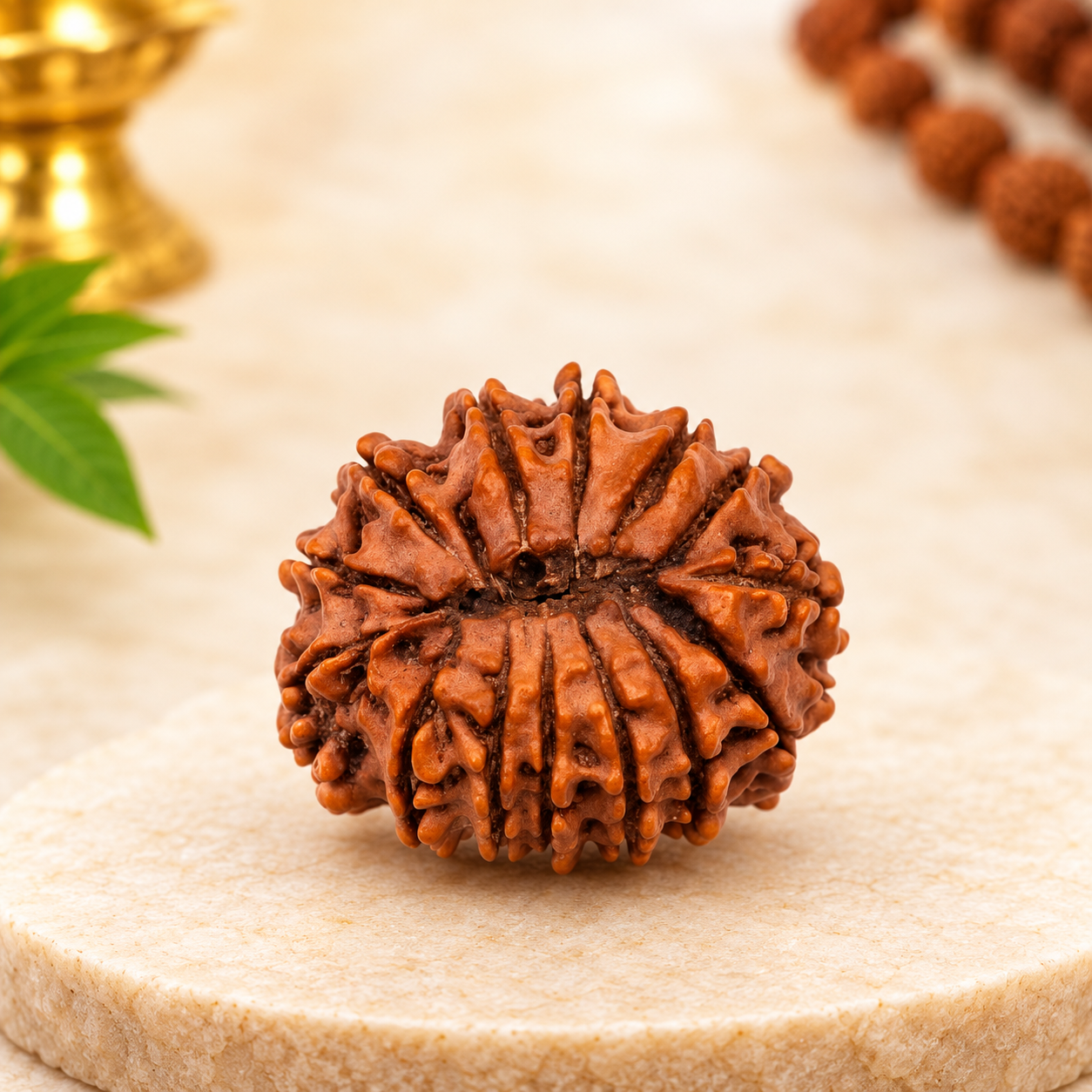
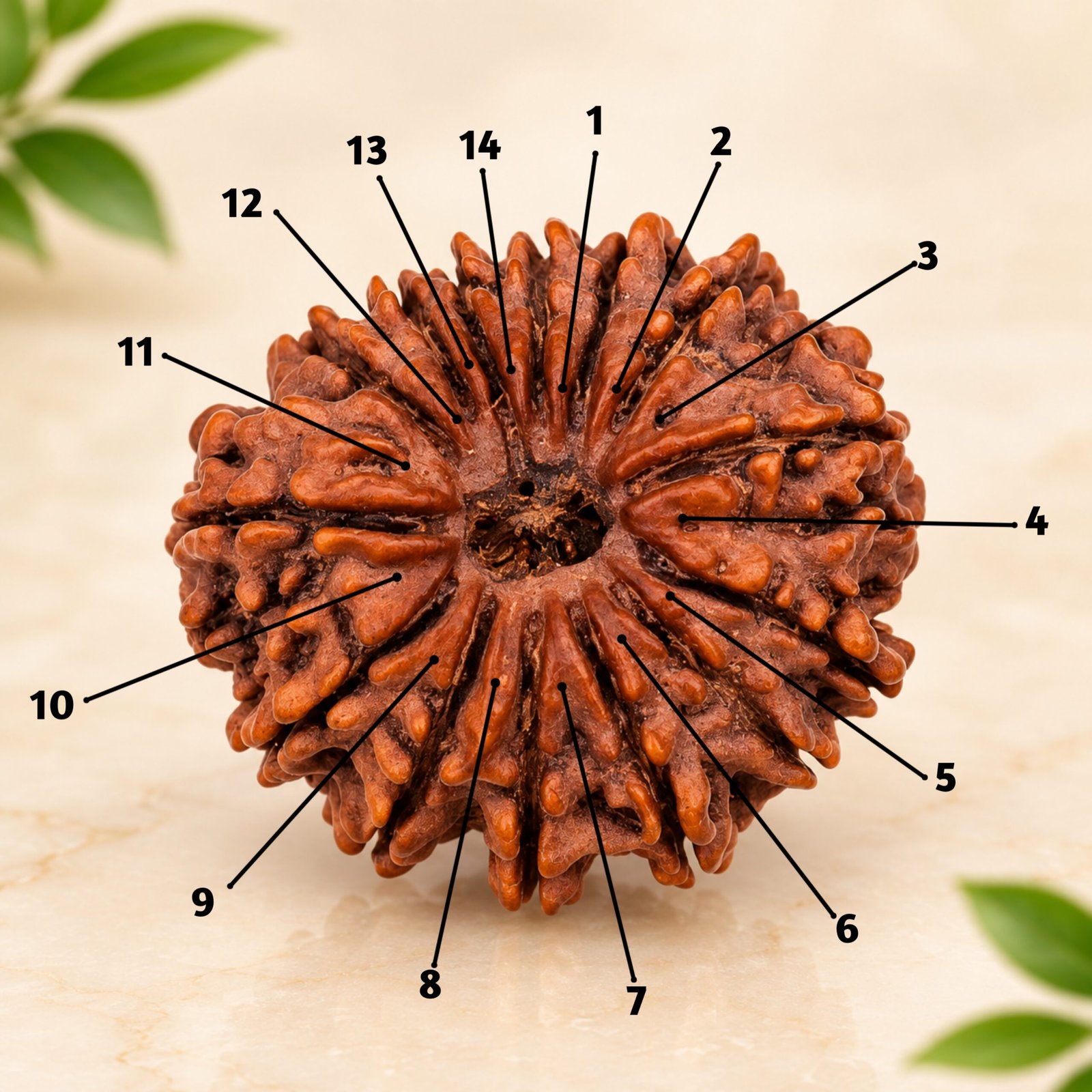
The 14 Mukhi Rudraksha is a rare and highly regarded bead in traditional Rudraksha practices. It features fourteen natural mukhi lines and is traditionally associated with awareness, intuition, discernment and spiritual wisdom.
Also known in traditional sources as Devmani, this bead holds a special place among people who follow Vedic spiritual practices. Its natural formation, distinctive texture and rarity make it an interesting choice for practitioners as well as Rudraksha collectors.
The bead is a natural seed, so every piece can differ slightly in size, shape, colour and surface texture.
Features of This Rare Nepali Bead
Nepali Rudraksha beads are traditionally appreciated for their natural appearance and clearly defined mukhi lines.
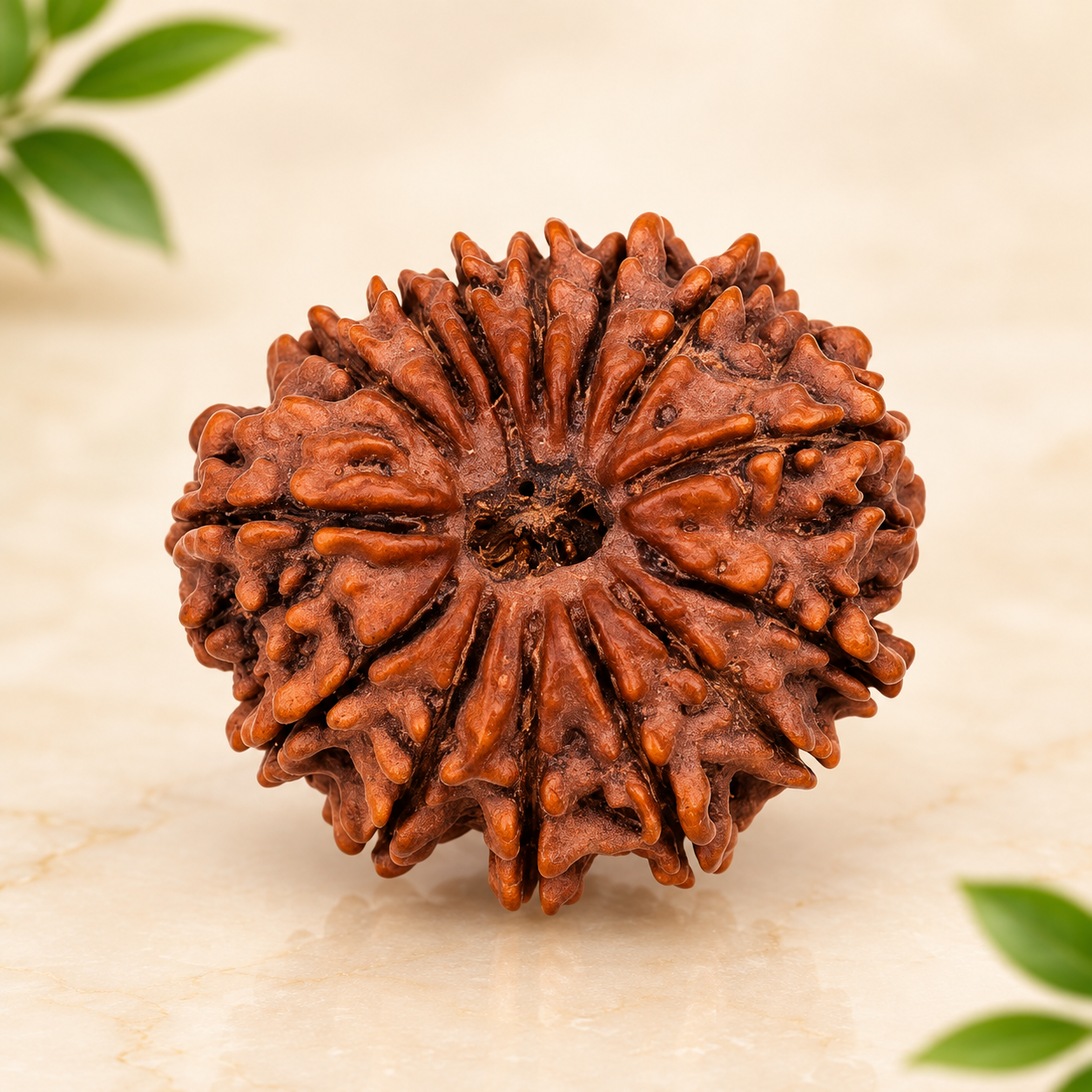
This particular variety is sought after because of its fourteen-faced formation. However, natural Rudraksha beads do not look identical. Minor variations in colour, shape, texture and size are normal.
Therefore, buyers should always examine the actual product photographs and available authenticity information before making a purchase.
Key Features
- Fourteen natural mukhi lines
- Rare Rudraksha variety
- Nepali origin, where specified for the individual product
- Natural seed with unique characteristics
- Traditionally valued in Vedic practices
- Suitable for spiritual practice and collection
- Individual bead may vary naturally in size and appearance
Spiritual Benefits in Vedic Tradition
Traditional Vedic practices associate this rare bead with qualities such as awareness, intuition and clarity of thought.
Practitioners may traditionally choose it for meditation, spiritual practices and personal worship. Furthermore, its symbolism makes it particularly interesting to people who wish to incorporate traditional Rudraksha practices into their daily spiritual routine.
These benefits belong to traditional spiritual beliefs and should not be interpreted as medical claims or guaranteed results.
How to Identify an Authentic Rudraksha
Authenticity is an important consideration when purchasing a rare Rudraksha.
Before purchasing, check the following:
- Natural and clearly visible mukhi lines
- Product photographs showing the actual bead
- Stated origin information
- Seller-provided authenticity details
- Certification or laboratory verification, where available
- Clear information about size and product specifications
A natural Rudraksha can have small surface variations. Therefore, unusual texture or minor differences do not automatically indicate a problem.
For a rare variety, buyers should give particular attention to authenticity documentation and the specific details provided for the individual bead.
Who Traditionally Uses This Bead?
People interested in traditional Vedic practices may choose this bead for meditation, worship and spiritual routines.
Some practitioners also collect rare Rudraksha varieties because of their cultural and spiritual significance. Additionally, people interested in traditional Hindu practices may appreciate its connection with ancient Rudraksha traditions.
The choice of a Rudraksha is ultimately personal and should align with the individual’s spiritual practice and beliefs.
How to Care for Your Rudraksha
Proper care can help maintain the natural condition of the bead.
Keep it away from unnecessary moisture and harsh chemicals. Clean it gently when required and allow it to dry naturally.
Moreover, store the bead in a clean and dry place when you are not using it. Avoid applying perfumes, chemical cleaners or other substances directly to the Rudraksha.
14 Mukhi Rudraksha at VedicDiscovery
At VedicDiscovery, we aim to provide clear information about traditional Vedic products so that customers can make informed purchasing decisions.
If you are exploring different Rudraksha varieties, you can also browse our Rudraksha Collection to compare other mukhi types and their traditional significance.
You may also explore our 5 Mukhi Rudraksha and 12 Mukhi Rudraksha products for additional options.
Frequently Asked Questions
What is a 14 Mukhi Rudraksha?
It is a naturally formed Rudraksha bead with fourteen mukhi or face lines. Traditional Rudraksha practices consider it a rare and spiritually significant variety.
What is the traditional significance of this bead?
Traditional practices associate the fourteen-faced variety with awareness, intuition, discernment and spiritual wisdom.
What is a Nepali Rudraksha?
A Nepali Rudraksha refers to a Rudraksha identified as originating from Nepal. Natural beads can vary in appearance, size, shape and texture.
Is this variety rare?
Yes. Naturally occurring fourteen-faced beads are generally considered less common than many popular lower-mukhi varieties.
How can I check authenticity?
Look for natural mukhi formation, clear photographs, origin information and authenticity documentation. Certification or laboratory verification can provide additional information where available.
Can everyone wear a Rudraksha?
Rudraksha use is generally connected with individual spiritual and cultural practices. People following specific traditions may choose to consult a knowledgeable practitioner regarding their personal practice.
Reviews
There are no reviews yet.